

For an entrepreneur or commercial property owner, collaborating with other business owners is one of the fastest ways to scale regional influence, split massive overhead costs, and execute high-value joint ventures that would be impossible to finance independently. When businesses pool their corporate resources, they unlock immense economies of scale, maximize foot-traffic cross-pollination, and drastically reduce their individual capital expenditure. However, the corporate landscape is littered with failed business-to-business alliances. These breakdowns rarely occur due to a lack of market demand or bad core intentions; instead, they collapse because the participating owners fail to clearly define operational boundaries, mismanage shared facility logistics, or treat structural real estate maintenance reactively.
Maximizing the return on investment of a business-to-business partnership requires moving past surface-level networking handshake agreements and implementing a rigorous operational framework governed by absolute legal clarity, shared infrastructure planning, and synchronized asset capitalization. When you enter a physical or logistical alliance with a peer owner, your shared property transforms into a complex ecosystem where every operational choice affects the bottom line of multiple independent corporations. To protect your corporate equity and maintain your facility’s physical value, you must approach co-ownership with an engineering mindset. This comprehensive guide delivers a highly detailed blueprint to help you structure, manage, and scale your collaborative business ventures, ensuring that your shared commerce environments remain safe, profitable, and highly efficient for decades to come.
Synchronizing Regional Brand Staging and Shared Physical Signage

The primary touchpoint of any physical business-to-business alliance is the shared exterior presentation of your commercial property. When multiple businesses operate within a single shopping pavilion, corporate office center, or industrial park, creating a cohesive visual landmark that draws consumer eye-lines without diluting individual brand identities is a delicate design challenge. If every independent owner installs mismatched, uncalibrated visual displays, the property rapidly develops a chaotic appearance that degrades consumer confidence. Peer owners must collaborate strategically to establish a premium, synchronized brand staging perimeter.
When splitting the substantial capital costs of building a centralized monument or pylon landmark at the property entryway, owners must navigate complex municipal zoning permits and architectural review boards collectively. Investing in high-visibility custom signs allows neighboring tenants to anchor their physical location, display clear wayfinding data, and maximize drive-by consumer impressions. When engineering these custom signs, owners must establish formal legal covenants that explicitly divide ongoing electrical utility expenses, dictate exact pixel dimensions for shared digital LED fields, and outline a proportional cost-sharing model for routine faceplate replacements.
- Verify local municipal sign ordinances to ensure your shared monument height and total square footage satisfy regional code limitations before fabricating panels.
- Incorporate a master architectural style guide that governs color temperatures and typeface families to ensure co-branded displays look premium.
- Establish a rotating digital display schedule within the sign’s programming logic to guarantee equal screen-time visibility for all participating entities.
With your external custom signs successfully drawing high volumes of consumer vehicles into the facility, managing the physical infrastructure that welcomes those consumers becomes the next critical operational priority. Heavy vehicular traffic will rapidly degrade asphalt binders, erode painted parking grid lines, and create dangerous pothole depressions that expose your businesses to severe slip-and-fall liability claims. To mitigate these infrastructure hazards smoothly, peer owners must pool their maintenance capital to retain professional parking lot contractors. Working with certified parking lot contractors allows co-owners to execute bulk asphalt sealcoating, implement precise traffic re-striping, and optimize ADA-compliant accessibility pathways across the entire shared parking field, creating a safe, welcoming, and flawless driving environment that satisfies commercial insurance mandates.
Sourcing Bulk Commodities and Scaling High-Volume Operations

Beyond the physical boundaries of real estate staging, business owners operating in proximity can unlock tremendous financial advantages by expanding their alliances into the domain of supply chain logistics and operational asset sharing. In a highly competitive commercial environment, purchasing individual, low-volume shipments of manufacturing raw materials, facility maintenance items, and specialized components places small and mid-sized operations at a severe disadvantage against massive conglomerate corporations. To level the playing field, neighboring business owners are forming independent buyer cooperatives to command extreme volume leverage during vendor negotiations.
Establishing a long-term, high-volume supply contract with a premier industrial product supplier allows local business clusters to bypass secondary retail markups and insulate themselves from sudden shipping disruptions. Sourcing your components, machinery parts, and specialized gear through a unified industrial product supplier means your cooperative can negotiate locked-in bulk pricing structures and secure dedicated freight delivery drops. This collaborative approach streamlines warehousing logistics, cuts down on shared freight tracking costs, and keeps your production lines running smoothly without draining individual cash flow reserves.
- Draft formal bylaws for your purchasing cooperative, detailing exact capital contribution deadlines and material distribution percentages for all members.
- Establish a centralized, secure storage zone within your shared warehouse facility to handle bulk offloads from freight carriers.
- Utilize unified inventory tracking software to monitor stock levels across all participating businesses, preventing accidental resource hoarding.
While streamlining your material pipeline through an authorized industrial product supplier secures your raw inputs, hospitality and food-service operations can achieve similar capital efficiencies by sharing expensive, heavy-duty commercial appliances. For adjacent restaurants, bars, and catering kitchens, duplication of secondary infrastructure represents massive waste in energy bills and floor space. To optimize facility space, neighboring culinary entrepreneurs frequently co-finance high-capacity commercial ice machines to serve multiple kitchens simultaneously. Placing these heavy-duty commercial ice machines in a central, easily accessible utility corridor allows both businesses to maintain code-compliant refrigeration reserves without duplicating capital expenditures. To ensure this shared hardware operates flawlessly, owners must establish strict standard operating procedures detailing daily sanitization schedules, water filter replacement cadences, and proportional financial contributions for emergency mechanical repairs.
Coordinating Major Structural Renovations and Joint Property Extensions
As local businesses successfully scale their operations within a shared commercial asset, they will eventually outgrow their original interior spatial footprints. Whether your joint venture requires expanding a central fulfillment area, constructing a multi-tenant corporate boardroom, or reconfiguring a series of small retail stalls into an open-concept consumer experience, executing structural modifications demands a high level of technical coordination. Attempting a major structural remodel in an isolated, piecemeal fashion can compromise load-bearing walls, disrupt common utility grids, and cause severe business downtime for your neighbors.
To minimize construction interference and maximize property equity, adjacent owners must pool their corporate capital to secure comprehensive remodeling services. Hiring an elite commercial firm that specializes in large-scale remodeling services ensures that your multi-unit buildout is handled by an experienced project manager who can orchestrate code-compliant structural calculations, secure complex municipal building permits, and manage subcontractor workflows across all affected units simultaneously. This unified management approach guarantees that structural expansions match your building’s original architectural integrity, while compressing the active construction timeline to get your revenue-generating zones back open for business as fast as possible.
- Incorporate comprehensive structural engineering reviews into your pre-construction phase to verify that building foundations can support shifted load parameters.
- Require your general contractor to deploy heavy-duty negative-pressure dust containment arrays to keep debris out of clean operational business zones.
- Draft formal operational waivers that dictate specific off-peak construction hours to prevent loud drilling from disrupting consumer experiences.
While high-end remodeling services handle internal spatial reconfigurations, co-owners must pay equal attention to the external building envelope that shields their inventory, machinery, and employees from the elements. Neglecting the masonry, lintels, and weatherproofing elements of a shared storefront is a costly mistake that can let moisture seep into wall cavities and degrade internal structural framing. To defend your collective real estate asset from environmental decay, owners must allocate funds for comprehensive building facade repairs. Executing timely building facade repairs, including professional tuck-pointing of brick joints, caulking structural window seals, and applying water-resistant barriers, ensures your building meets municipal structural safety mandates while projecting a crisp, premium aesthetic that drives consumer confidence for every business operating behind the glass.
Engineering Complex Underfoot Hardscapes and Property Entryways
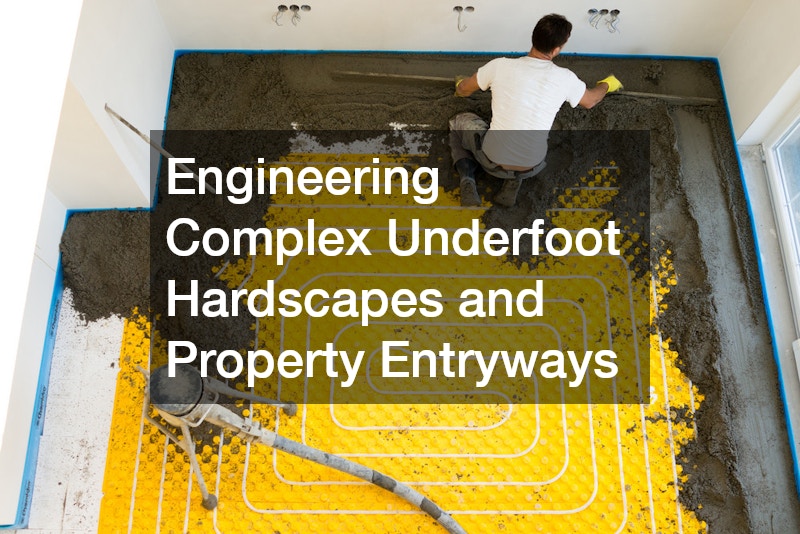
A commercial property’s heavy hardscapes, such as loading dock aprons, heavy-duty dumpster enclosures, and main shipping entryways, face intense, continuous mechanical punishment. When high-volume freight trucks, delivery vans, and refuse vehicles continuously roll over standard residential-grade paving, the surface will rapidly develop deep ruts, alligator cracking, and severe base failures. Because these high-load traffic lanes are shared infrastructure assets used by all tenants on a commercial property, managing their maintenance and engineering updates must be handled as a shared corporate responsibility.
When upgrading high-traffic loading sectors to handle heavy industrial vehicles, owners must bypass cheap asphalt patches and retain a certified concrete contractor to install engineered slabs. Working alongside an authorized concrete contractor allows your management team to specify heavy-gauge, fiber-reinforced concrete mixes poured over a deeply compacted sub-base stone foundation. Ensuring your concrete contractor cuts precise expansion joints and applies high-durability chemical sealers guarantees that your shared loading zones can withstand immense weight loads without shifting, eliminating underfoot safety hazards, and protecting your logistics flow from unexpected structural failures.
- Excavate all shared loading zones down to virgin sub-grade soil, replacing soft earth with a minimum of six inches of compacted ABC stone base.
- Enforce a mandatory, complete vehicle lockout period across the fresh slab to allow the concrete to reach its full design compressive strength safely.
- Apply advanced slip-resistant Broom finishes across all exterior commercial concrete paths to maximize worker safety during icy winter months.
While a qualified concrete contractor secures your property’s ground-level hardscape, co-owners must look upward to manage the single most critical protective shield of their shared investment: the commercial roofing system. In multi-tenant structures, a leak above one retail space can easily migrate horizontally across structural steel joists, destroying inventory and shutting down operations several units away. To prevent this cascading financial damage, co-owners must partner with a certified commercial roofing contractor to implement predictive maintenance programs and execute full flat-roof restorations. Coordinating with an authorized roofing contractor allows your alliance to apply high-performance TPO or modified bitumen membranes that improve the building’s thermal efficiency, lower shared HVAC utility overhead, and deliver decades of ironclad leak protection backed by premium manufacturer material warranties.
Managing External Environmental Landscaping and Wastewater Runoff

The ultimate layer of a successful, multi-tenant commercial property strategy involves taking absolute command of the surrounding green spaces, environmental retention basins, and storm-water management infrastructure. The condition of your property’s perimeter landscaping directly influences your regional consumer demographic and establishes your firm’s local environmental stewardship profile. If your property features unmanaged green spaces, overgrown brush lines, or blocked drainage basins, you will quickly face municipal code violation fines, mosquito infestations, and severe soil erosion along your foundation footings.
To transform your property’s exterior acreage into an asset that actively drives consumer foot traffic while minimizing long-term utility costs, co-owners must retain a licensed landscape planner. A professional landscape planner will design a comprehensive master site plan that utilizes indigenous, low-maintenance vegetation to reduce irrigation water consumption. Strategic placement of shade trees, architectural buffer hedges, and pedestrian seating zones by an experienced landscape planner helps create an inviting outdoor environment for consumers, while simultaneously shielding your building’s primary windows from intense summer thermal solar gain, lowering collective cooling costs across the entire multi-unit facility.
- Incorporate native, drought-tolerant xeriscape vegetation choices to completely eliminate the need for expensive, high-volume automated watering networks.
- Design custom bioretention swales packed with specific filtering soils and stones to naturally process and clean contaminated asphalt parking runoff water.
- Maintain clear visual sightlines across all outdoor parking sectors to ensure corporate security cameras possess completely unobstructed viewing angles.
While strategic green design updates the visual aesthetic of your commercial facility, those landscaping changes must be supported by regular maintenance of your building’s primary water diversion lines. During severe rainstorms, a massive volume of stormwater sheets off large commercial flat roofs. If your property’s drainage troughs are packed with organic debris, twigs, and windblown trash, that water will back up under the roof membrane, spill over the building’s edges, and erode the surrounding landscaping, causing severe hydraulic flooding along your foundational concrete walls. Co-owners must eliminate this risk by locking in a strict schedule for regular gutter cleaning and downspout flushing. Investing in professional gutter cleaning services twice a year keeps your water pathways completely clear, channels heavy stormwater safely away from structural columns into engineered municipal lines, and protects all neighboring businesses from the immense financial disruption of structural water damage.
Ultimate success in collaborative commerce is achieved only when participating business owners step fully into the authoritative role of proactive facility directors who treat their property as a singular, tightly integrated corporate investment. By taking definitive command of your shared space, from deploying premium custom signs and hiring parking lot contractors to partnering with certified concrete contractors, roofing contractors, and elite remodeling services, you successfully insulate your collective investments from failure. Build a reliable network of licensed commercial technicians, experienced structural engineers, and authorized legal advisors who respect the unique technical needs of your property. Manage your shared facility logs with laboratory precision, honor the data-driven demands of the physical structure, and advance your collaborative business ventures with the absolute assurance that your enterprise will stand as a secure, thriving fortress of commerce and equity for decades to come.